

Your daily news update on the United Kingdom
Provided by AGP
Zero Carbon Shipping Market Size Worth $3.6 Billion by 2030 - Exclusive Report by The Business Research Company
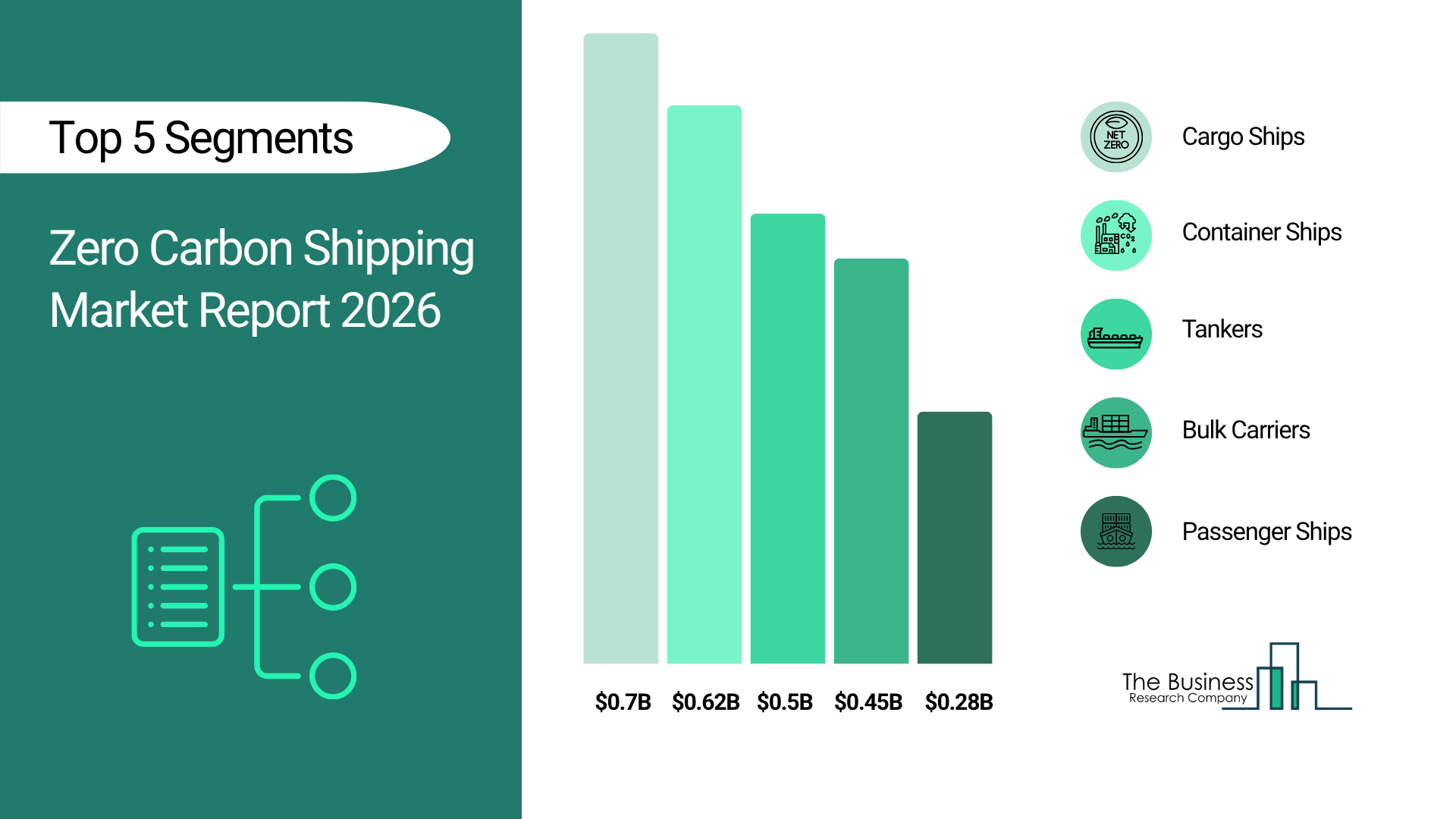
Zero Carbon Shipping Market Report 2026_Segments
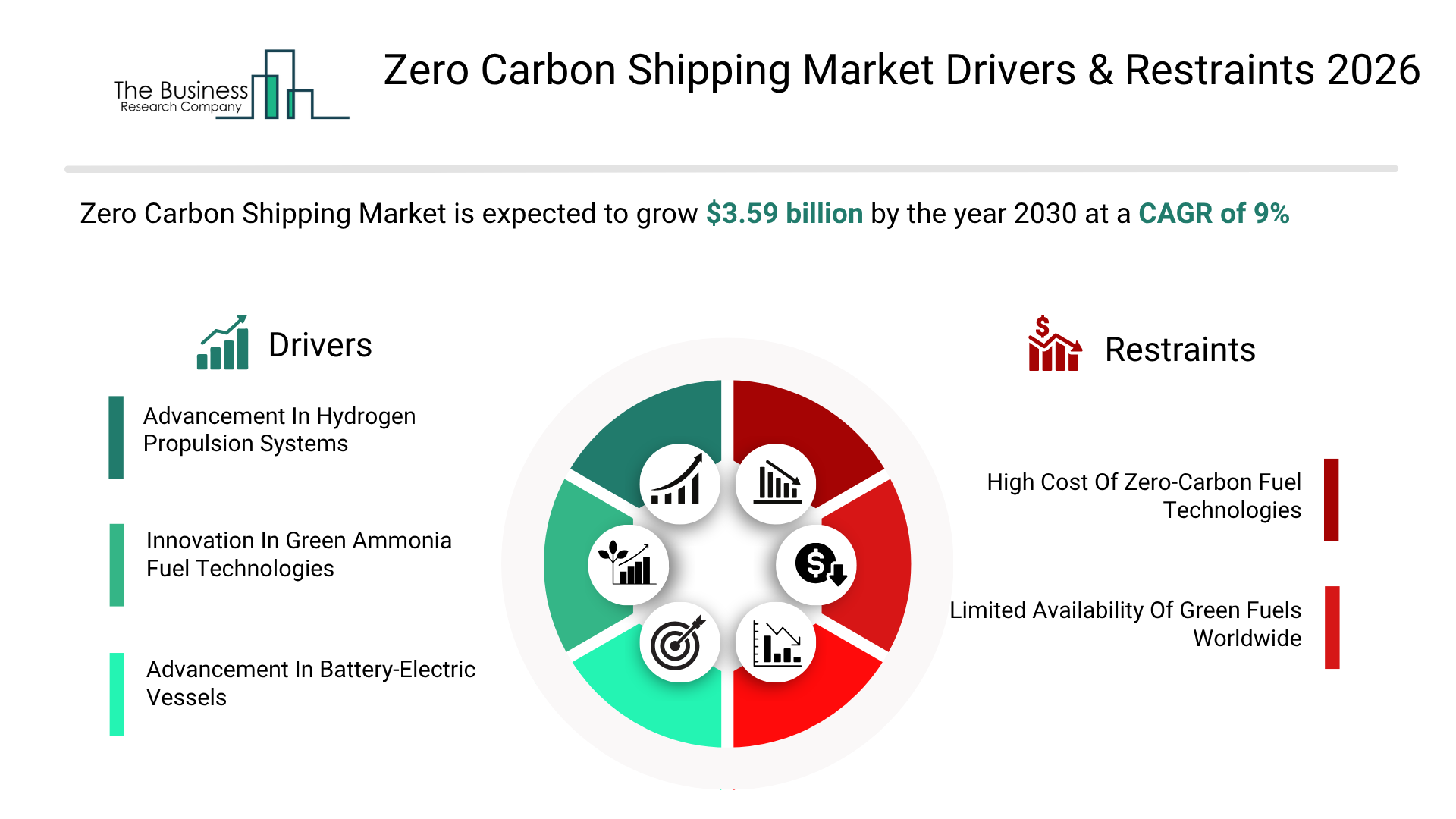
Zero Carbon Shipping Market Drivers & Restraints 2026
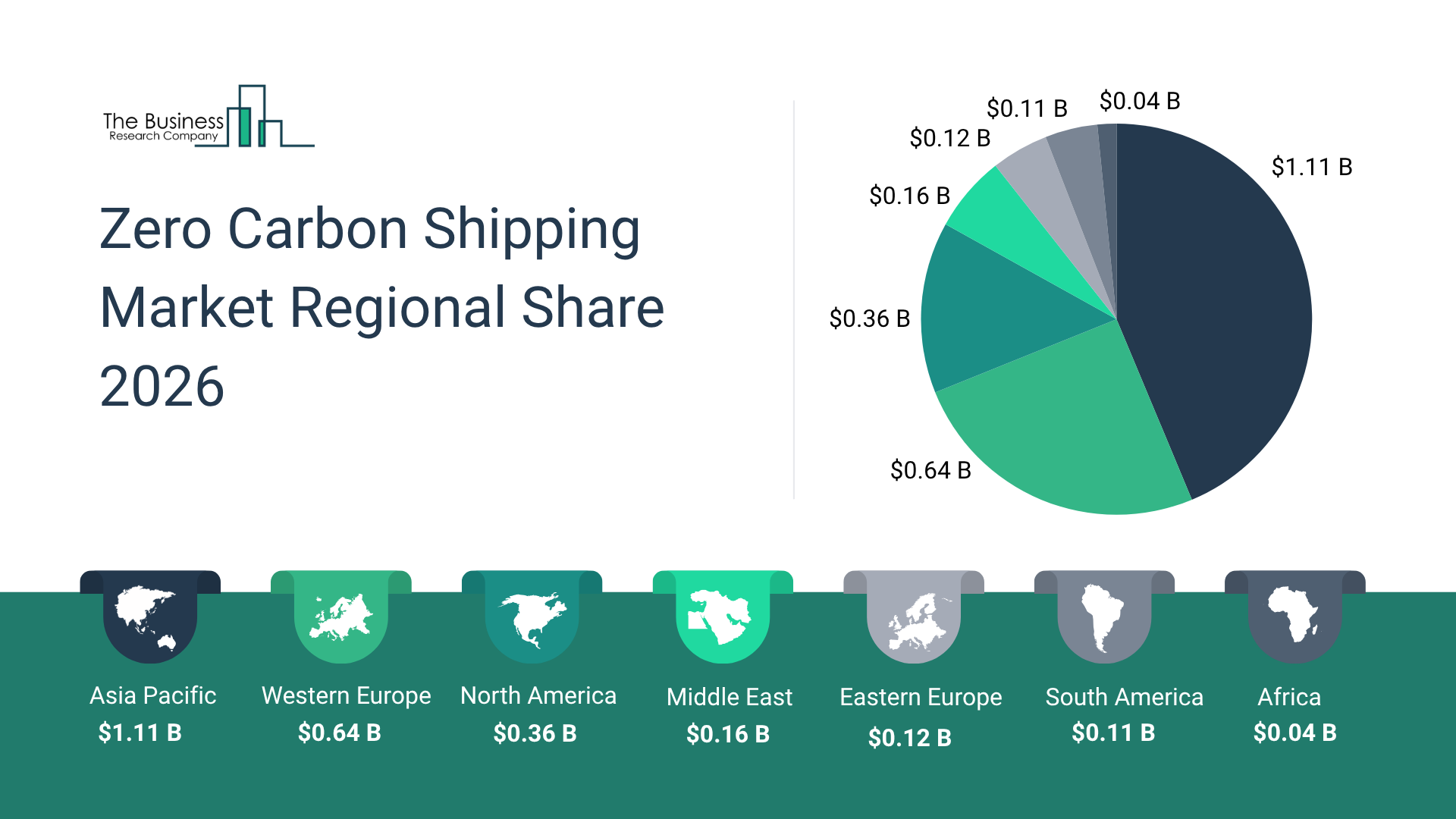
Zero Carbon Shipping Market Regional Share 2026
The Business Research Company's Zero Carbon Shipping Market Report 2026 – Market Size, Trends, And Global Forecast 2026-2035
LONDON, GREATER LONDON, UNITED KINGDOM, May 13, 2026 /EINPresswire.com/ -- "Zero Carbon Shipping market to surpass $4 billion by 2030. In comparison, the Deep Sea, Coastal, And Great Lakes market, which is considered as its parent market, is expected to be approximately $730 billion by 2030, with Zero Carbon Shipping to represent around 1% of the parent market. Within the broader Transport Services industry, which is expected to be $12,477 billion by 2030, the Zero Carbon Shipping market is estimated to account for nearly 0.03% of the total market value.
Which Will Be The Biggest Region In The Zero Carbon Shipping Market In 2030?
Asia Pacific will be the largest region in the zero carbon shipping market in 2030, valued at $1.6 billion. The market is expected to grow from $1.0 billion in 2025 at a compound annual growth rate (CAGR) of 10%. The strong growth can be attributed to the rapid expansion of maritime trade corridors across emerging economies, increasing adoption of alternative marine fuels to comply with international decarbonization targets, rising investments in green port infrastructure and bunkering facilities, strong presence of large commercial fleets undergoing fleet modernization, and growing collaborations between shipping companies and technology providers to accelerate the deployment of low-emission vessels across regional trade routes.
Which Will Be The Largest Country In The Global Zero Carbon Shipping Market In 2030?
China will be the largest country in the zero carbon shipping market in 2030, valued at $0.9 billion. The market is expected to grow from $0.5 billion in 2025 at a compound annual growth rate (CAGR) of 10%. The strong growth can be attributed to the country’s dominance in global shipbuilding activities, increasing deployment of zero-emission pilot vessels across coastal and inland waterways, strong government-backed initiatives to develop hydrogen and ammonia-based marine fuel ecosystems, rapid electrification of short-distance shipping fleets, and continuous investments by domestic shipping operators in next-generation propulsion technologies to enhance operational efficiency and reduce carbon intensity.
Request A Free Sample Of The Zero Carbon Shipping Market Report
https://www.thebusinessresearchcompany.com/sample_request?id=32451&type=smp&utm_source=EINPresswire&utm_medium=Paid&utm_campaign=May_PR
What Will Be The Largest Segment In The Zero Carbon Shipping Market In 2030?
The zero carbon shipping market is segmented by ship type into cargo ships, container ships, tankers, bulk carriers, and passenger ships. The cargo ships market will be the largest segment of the zero carbon shipping market segmented by ship type, accounting for 27% or $1 billion of the total in 2030. The cargo ships market will be supported by the high volume of global goods transportation handled by cargo fleets, increasing retrofitting of existing vessels with low-emission propulsion systems, growing demand for cost-efficient long-haul decarbonized shipping solutions, rising integration of digital voyage optimization systems to minimize fuel consumption, and expanding investments in scalable zero-carbon fuel supply chains to support large cargo vessel operations across international trade routes.
The zero carbon shipping market is segmented by fuel type into green hydrogen, green ammonia, bio-liquefied natural gas (LNG), methanol, and synthetic fuels.
The zero carbon shipping market is segmented by technology into fuel cell propulsion, battery-electric propulsion, hybrid propulsion systems, wind-assisted propulsion, and solar-assisted propulsion.
The zero carbon shipping market is segmented by application into deep-sea shipping, short-sea shipping, and inland water transport.
The zero carbon shipping market is segmented by end user into manufacturing, oil and gas, agriculture, retail, passenger transportation, and other industries.
What Is The Expected CAGR For The Zero Carbon Shipping Market Leading Up To 2030?
The expected CAGR for the zero carbon shipping market leading up to 2030 is 9%.
What Will Be The Growth Driving Factors In The Global Zero Carbon Shipping Market In The Forecast Period?
The rapid growth of the global zero carbon shipping market leading up to 2030 will be driven by the following key factors that are expected to address advancement in hydrogen propulsion systems through onboard hydrogen storage and fuel cell efficiency for medium- and long-distance maritime routes, respond to innovation in green ammonia fuel technologies with carbon-free combustion properties and ease of storage for long-haul decarbonization, and support advancement in battery-electric vessels through improved battery energy density and charging infrastructure for short-sea shipping and inland waterways across the global shipping industry.
Advancement In Hydrogen Propulsion Systems - The advancement in hydrogen propulsion systems is expected to become a key growth driver for the zero carbon shipping market by 2030. Shipping companies are increasingly exploring hydrogen-based fuel cell systems to enable zero-emission operations, particularly for medium- and long-distance maritime routes. Hydrogen propulsion offers high energy density and eliminates direct carbon emissions, making it a viable alternative to conventional marine fuels. Technological improvements in onboard hydrogen storage, fuel cell efficiency, and safety systems are further enhancing its commercial feasibility. Industry stakeholders are actively investing in pilot projects and infrastructure development to accelerate adoption. As a result, the advancement in hydrogen propulsion systems is anticipated to contribute approximately 3.0% annual growth to the market.
Innovation In Green Ammonia Fuel Technologies - The innovation in green ammonia fuel technologies is expected to emerge as a major factor driving the expansion of the zero carbon shipping market by 2030. Green ammonia is gaining traction as a scalable marine fuel due to its carbon-free combustion properties and ease of storage compared to hydrogen. Advancements in ammonia engine design, fuel handling systems, and global supply chain development are supporting its integration into commercial shipping fleets. Additionally, partnerships between energy providers and shipping operators are facilitating large-scale ammonia fuel production and bunkering capabilities. The growing focus on long-haul decarbonization is further strengthening the role of ammonia as a preferred alternative fuel. Consequently, innovation in green ammonia fuel technologies is projected to contribute around 2.8% annual growth to the market.
Advancement In Battery-Electric Vessels - The advancement in battery-electric vessels is expected to act as a key growth catalyst for the zero carbon shipping market by 2030. Electrification of vessels is gaining momentum in short-sea shipping and inland waterways due to improvements in battery energy density, charging infrastructure, and operational efficiency. Battery-electric propulsion enables silent, emission-free operations and reduces maintenance requirements compared to traditional engines. Increasing deployment of fully electric ferries, cargo vessels, and service ships is demonstrating the commercial viability of this technology. Furthermore, integration of smart energy management systems is optimizing battery usage and extending operational range. Therefore, the advancement in battery-electric vessels is projected to contribute approximately 2.3% annual growth to the market.
Access The Detailed Zero Carbon Shipping Market Report Here
https://www.thebusinessresearchcompany.com/report/zero-carbon-shipping-market-report?utm_source=EINPresswire&utm_medium=Paid&utm_campaign=May_PR
What Are The Key Growth Opportunities In The Zero Carbon Shipping Market In 2030?
The most significant growth opportunities are anticipated in the cargo ships market, the container ships market, the tankers market, the bulk carriers market, and the passenger ships market. Collectively, these segments are projected to contribute over $1.3 billion in market value by 2030, driven by rising fleet decarbonization initiatives across commercial shipping lines, increasing replacement of aging vessels with low-emission alternatives, growing investments in next-generation propulsion retrofits, expansion of global seaborne trade requiring sustainable logistics solutions, and continuous advancements in vessel design to improve operational efficiency and environmental performance. This momentum reflects the shipping industry’s transition toward cleaner operations, accelerating growth across the global zero carbon maritime ecosystem.
The cargo ships market is projected to grow by $0.3 billion, the container ships market by $0.3 billion, the tankers market by $0.2 billion, the bulk carriers market by $0.2 billion, and the passenger ships market by $0.1 billion over the next five years from 2025 to 2030.
Learn More About The Business Research Company
The Business Research Company (www.thebusinessresearchcompany.com) is a leading market intelligence firm renowned for its expertise in company, market, and consumer research. We have published over 17,500 reports across 27 industries and 60+ geographies. Our research is powered by 1,500,000 datasets, extensive secondary research, and exclusive insights from interviews with industry leaders.
We provide continuous and custom research services, offering a range of specialized packages tailored to your needs, including Market Entry Research Package, Competitor Tracking Package, Supplier & Distributor Package and much more.
Disclaimer: Please note that the findings, conclusions and recommendations that TBRC Business Research Pvt Ltd delivers are based on information gathered in good faith from both primary and secondary sources, whose accuracy we are not always in a position to guarantee. As such TBRC Business Research Pvt Ltd can accept no liability whatever for actions taken based on any information that may subsequently prove to be incorrect. Analysis and findings included in TBRC reports and presentations are our estimates, opinions and are not intended as statements of fact or investment guidance.
Contact Us:
The Business Research Company
Americas +1 310-496-7795
Europe +44 7882 955267
Asia & Others +44 7882 955267 & +91 8897263534
Email: marketing@tbrc.info
Follow Us On:
LinkedIn: https://in.linkedin.com/company/the-business-research-company"
Oliver Guirdham
The Business Research Company
+44 7882 955267
info@tbrc.info
Visit us on social media:
LinkedIn
Facebook
X
Legal Disclaimer:
EIN Presswire provides this news content "as is" without warranty of any kind. We do not accept any responsibility or liability for the accuracy, content, images, videos, licenses, completeness, legality, or reliability of the information contained in this article. If you have any complaints or copyright issues related to this article, kindly contact the author above.
