High-Temperature FKM O-Rings: Understanding Bisphenol vs. Peroxide Cured Fluoroelastomers
CHENGDU, SICHUAN, CHINA, August 31, 2026 /EINPresswire.com/ -- When specifying High-Temperature FKM O-Rings for demanding industrial environments, procurement professionals and design engineers must look past basic temperature ratings and focus on the underlying curing chemistry. Chenguang Fluoro and Silicone Elastomers Co., Ltd. — FSE for short — actively supports accurate fluoroelastomer selection by providing clear technical distinctions between its Fluoron bisphenol-cured and peroxide-cured FKM systems. With a manufacturing foundation certified to IATF16949:2016 and supported by a team of over 300 professionals, the company ensures that O-ring manufacturers and OEM buyers can match the correct crosslinking mechanism to their specific media exposure and thermal cycling demands, thereby securing the long-term integrity of critical fluid containment systems.
The Curing System Determines the FKM Crosslink Architecture
The fundamental performance of any fluoroelastomer seal begins with its chemical architecture, specifically the crosslinking mechanism that binds the polymer chains together during vulcanization. This curing system dictates how the resulting O-ring will respond to sustained mechanical stress, extreme thermal loads, and aggressive fluid environments over its operational lifespan.
Engineering teams must recognize that a base fluoroelastomer polymer remains incomplete without an appropriate crosslinking agent. FSE structures its technical guidance around the fact that bisphenol and peroxide curing systems create distinct molecular networks. Each network exhibits unique strengths and inherent vulnerabilities, making them suitable for entirely different industrial applications.
During the O-ring procurement process, specifying only the FKM polymer type or a generic hardness value is insufficient for high-risk applications. Buyers must explicitly define the curing system in their material specifications, as the choice between bisphenol and peroxide fundamentally determines whether the seal will maintain its elastic memory or fail prematurely under challenging operational conditions.
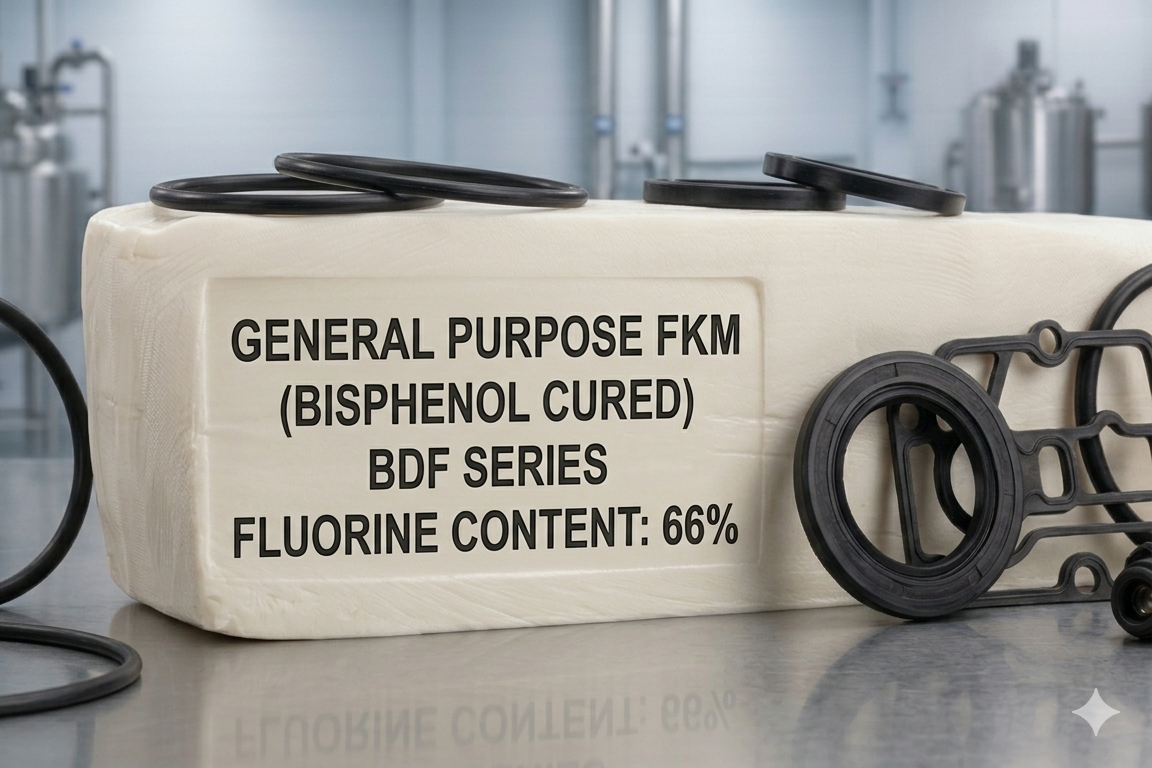
Bisphenol Cured FKM Optimizes Compression Set and Processing
For the vast majority of standard industrial sealing applications, bisphenol-cured FKM systems deliver an optimal balance of mechanical resilience and manufacturing efficiency. This curing mechanism establishes a highly stable polymer network that excels in maintaining its shape and sealing force when subjected to continuous compressive loads.
Fluoron bisphenol-cured grades are widely favored for standard engine oils, lubricants, and transmission fluids where long-term compression set resistance is the primary engineering requirement. The bisphenol curing process yields O-rings that resist flattening out over time, ensuring a continuous, leak-free barrier in automotive powertrains and general industrial hydraulics.
Furthermore, bisphenol curing offers excellent mold release and processing behavior, which directly translates to manufacturing efficiency and dimensional accuracy for the O-ring producer. Procurement teams specifying bisphenol-cured systems secure a highly reliable, cost-effective solution for standard high-temperature environments where extreme chemical aggression is not the primary failure mode.
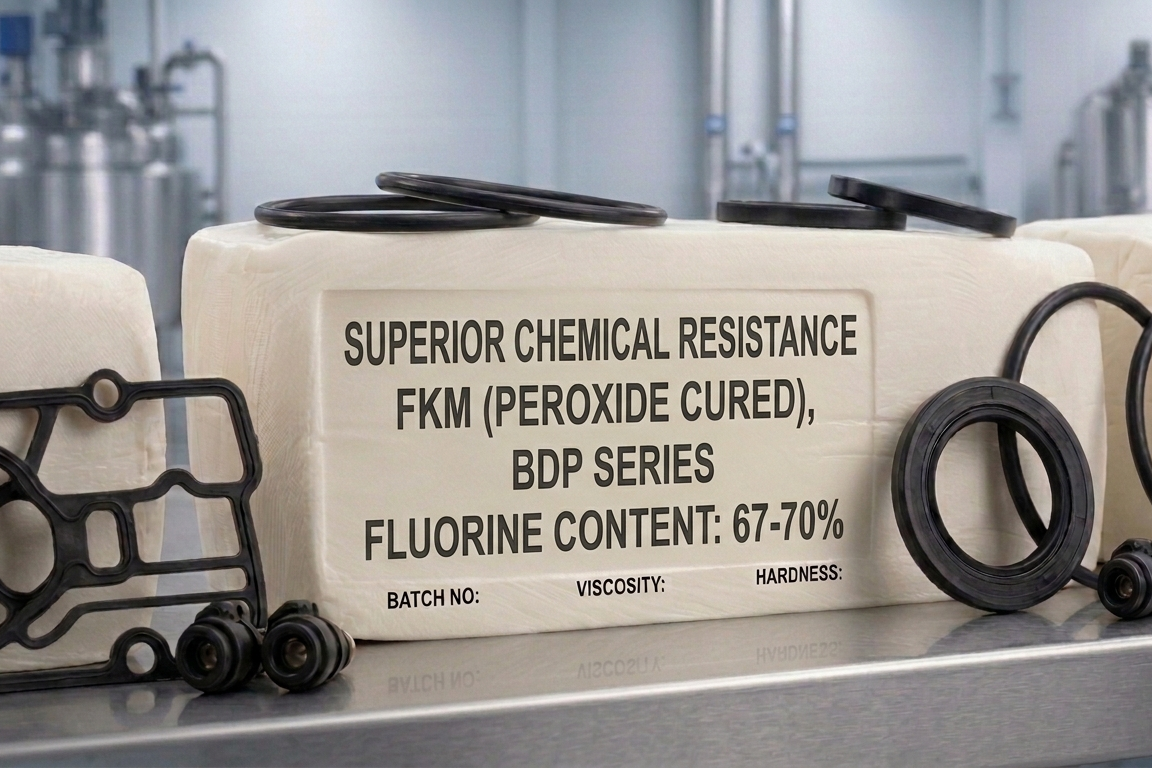
Peroxide Cured FKM Defends Against Aggressive Media and Steam
When the operational environment escalates to include saturated steam, modern biofuel blends, or aggressive chemical processing fluids, standard bisphenol systems become vulnerable to chemical attack. In these severe environments, peroxide-cured FKM systems are strictly required to prevent rapid degradation and catastrophic seal failure.
The peroxide curing mechanism replaces the vulnerable carbon-oxygen crosslinks found in bisphenol systems with exceptionally robust carbon-carbon bonds. This superior chemical architecture renders peroxide-cured FKM highly resistant to nucleophilic attack, making it the definitive choice for challenging media such as methanol-blended fuels, amine-containing inhibitors, and high-pressure steam applications.
While peroxide-cured systems offer unmatched chemical resistance, they traditionally require more precise processing controls and may exhibit slightly different compression set characteristics compared to their bisphenol counterparts. Therefore, engineers must carefully evaluate the trade-offs and specify peroxide curing only when the operational environment demands absolute defense against severe chemical or steam exposure.
Advanced Manufacturing Controls Ensure Batch-To-Batch Reliability
The theoretical benefits of advanced FKM curing systems can only be realized in the field if the base material is produced with absolute consistency. Variations in the pre-compound formulation can lead to unpredictable curing behaviors, resulting in O-rings that fail to meet dimensional tolerances or mechanical specifications.
Operating from an advanced manufacturing site in Suining, China, the company leverages over two decades of dedicated fluoroelastomer expertise to maintain strict control over its production processes. This extensive operational scale, supported by a workforce of over 300 employees, enables the precise formulation and consistent delivery of both bisphenol and peroxide systems.
This commitment to manufacturing excellence is validated by rigorous SGS certifications, including IATF16949:2016, ISO9001:2015, and ISO14001:2015. For procurement teams sourcing critical FKM materials, these accreditations provide documented assurance that every batch of pre-compound will perform predictably during vulcanization, ensuring the ultimate reliability of the finished O-ring components.
Accurate FKM Selection Requires Data-Driven Technical Collaboration
Securing the right FKM material for high-temperature O-rings demands a shift from generic sourcing to data-driven technical collaboration. By understanding the distinct advantages of bisphenol and peroxide curing systems, engineering teams can eliminate guesswork and specify the exact material required for component survival.
The company provides comprehensive technical support to assist OEMs and seal manufacturers in evaluating target media, thermal parameters, and mechanical loads against specific Fluoron FKM grades. This proactive evaluation ensures that the chosen crosslinking system aligns perfectly with the intended service environment.
Guided by the commitment to "Fluorine & Silicone, for a Better Life," the organization stands ready to support demanding sealing projects with verified material data and formulation expertise. Technical teams seeking to optimize their high-temperature FKM O-ring specifications can initiate application-specific reviews and sample requests directly through https://www.cgfse.com/.
The Curing System Determines the FKM Crosslink Architecture
The fundamental performance of any fluoroelastomer seal begins with its chemical architecture, specifically the crosslinking mechanism that binds the polymer chains together during vulcanization. This curing system dictates how the resulting O-ring will respond to sustained mechanical stress, extreme thermal loads, and aggressive fluid environments over its operational lifespan.
Engineering teams must recognize that a base fluoroelastomer polymer remains incomplete without an appropriate crosslinking agent. FSE structures its technical guidance around the fact that bisphenol and peroxide curing systems create distinct molecular networks. Each network exhibits unique strengths and inherent vulnerabilities, making them suitable for entirely different industrial applications.
During the O-ring procurement process, specifying only the FKM polymer type or a generic hardness value is insufficient for high-risk applications. Buyers must explicitly define the curing system in their material specifications, as the choice between bisphenol and peroxide fundamentally determines whether the seal will maintain its elastic memory or fail prematurely under challenging operational conditions.
Bisphenol Cured FKM Optimizes Compression Set and Processing
For the vast majority of standard industrial sealing applications, bisphenol-cured FKM systems deliver an optimal balance of mechanical resilience and manufacturing efficiency. This curing mechanism establishes a highly stable polymer network that excels in maintaining its shape and sealing force when subjected to continuous compressive loads.
Fluoron bisphenol-cured grades are widely favored for standard engine oils, lubricants, and transmission fluids where long-term compression set resistance is the primary engineering requirement. The bisphenol curing process yields O-rings that resist flattening out over time, ensuring a continuous, leak-free barrier in automotive powertrains and general industrial hydraulics.
Furthermore, bisphenol curing offers excellent mold release and processing behavior, which directly translates to manufacturing efficiency and dimensional accuracy for the O-ring producer. Procurement teams specifying bisphenol-cured systems secure a highly reliable, cost-effective solution for standard high-temperature environments where extreme chemical aggression is not the primary failure mode.
Peroxide Cured FKM Defends Against Aggressive Media and Steam
When the operational environment escalates to include saturated steam, modern biofuel blends, or aggressive chemical processing fluids, standard bisphenol systems become vulnerable to chemical attack. In these severe environments, peroxide-cured FKM systems are strictly required to prevent rapid degradation and catastrophic seal failure.
The peroxide curing mechanism replaces the vulnerable carbon-oxygen crosslinks found in bisphenol systems with exceptionally robust carbon-carbon bonds. This superior chemical architecture renders peroxide-cured FKM highly resistant to nucleophilic attack, making it the definitive choice for challenging media such as methanol-blended fuels, amine-containing inhibitors, and high-pressure steam applications.
While peroxide-cured systems offer unmatched chemical resistance, they traditionally require more precise processing controls and may exhibit slightly different compression set characteristics compared to their bisphenol counterparts. Therefore, engineers must carefully evaluate the trade-offs and specify peroxide curing only when the operational environment demands absolute defense against severe chemical or steam exposure.
Advanced Manufacturing Controls Ensure Batch-To-Batch Reliability
The theoretical benefits of advanced FKM curing systems can only be realized in the field if the base material is produced with absolute consistency. Variations in the pre-compound formulation can lead to unpredictable curing behaviors, resulting in O-rings that fail to meet dimensional tolerances or mechanical specifications.
Operating from an advanced manufacturing site in Suining, China, the company leverages over two decades of dedicated fluoroelastomer expertise to maintain strict control over its production processes. This extensive operational scale, supported by a workforce of over 300 employees, enables the precise formulation and consistent delivery of both bisphenol and peroxide systems.
This commitment to manufacturing excellence is validated by rigorous SGS certifications, including IATF16949:2016, ISO9001:2015, and ISO14001:2015. For procurement teams sourcing critical FKM materials, these accreditations provide documented assurance that every batch of pre-compound will perform predictably during vulcanization, ensuring the ultimate reliability of the finished O-ring components.
Accurate FKM Selection Requires Data-Driven Technical Collaboration
Securing the right FKM material for high-temperature O-rings demands a shift from generic sourcing to data-driven technical collaboration. By understanding the distinct advantages of bisphenol and peroxide curing systems, engineering teams can eliminate guesswork and specify the exact material required for component survival.
The company provides comprehensive technical support to assist OEMs and seal manufacturers in evaluating target media, thermal parameters, and mechanical loads against specific Fluoron FKM grades. This proactive evaluation ensures that the chosen crosslinking system aligns perfectly with the intended service environment.
Guided by the commitment to "Fluorine & Silicone, for a Better Life," the organization stands ready to support demanding sealing projects with verified material data and formulation expertise. Technical teams seeking to optimize their high-temperature FKM O-ring specifications can initiate application-specific reviews and sample requests directly through https://www.cgfse.com/.
Chenguang Fluoro & Silicone Elastomers Co., Ltd.
FSE
email us here
Visit us on social media:
LinkedIn
Instagram
Facebook
YouTube
TikTok
X
Legal Disclaimer:
EIN Presswire provides this news content "as is" without warranty of any kind. We do not accept any responsibility or liability for the accuracy, content, images, videos, licenses, completeness, legality, or reliability of the information contained in this article. If you have any complaints or copyright issues related to this article, kindly contact the author above.